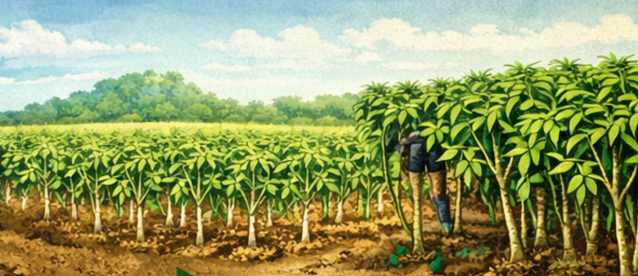
Cassava production occupies a central place in Nigeria’s agricultural economy, serving as both a staple food source and a strategic industrial raw material. As the world’s largest producer of cassava, Nigeria benefits from favourable agro-ecological conditions, a long tradition of cultivation, and widespread smallholder participation across nearly all regions of the country. Beyond its role in food security, cassava contributes significantly to rural livelihoods, employment generation, and value-chain development through its diverse uses in garri, fufu, starch, flour, animal feed, and emerging bio-industrial applications. Understanding the principles, technologies, and best practices of cassava production is therefore essential for improving productivity, enhancing quality, and promoting sustainable agricultural development in Nigeria’s evolving agribusiness landscape.